Integration of UAV Aerial Imagery and NIR Sensors for Precision Sugarcane Management
Thailand’s sugarcane and sugar industry is considered one of the pillars of global exports. However, behind this success, farmers and sugar mills consistently face traditional limitations, particularly the agricultural labor shortage driven by an aging society and unpredictable weather conditions.
In the past, determining whether sugarcane in the field was sweet enough to harvest often relied on randomly cutting stalks and sending them to a laboratory for chemical analysis. This method is not only slow and destructive, but it also fails to accurately reflect the true condition of the entire field. Consequently, harvesting decisions may miss the optimal timing, resulting in a loss of sweetness (C.C.S.) and ultimately causing price disputes at the mill.
How can we overcome this problem? The innovations of UAVs (drones) and NIR sensors provide the answer to transforming ordinary sugarcane fields into fully realized Smart Farms.
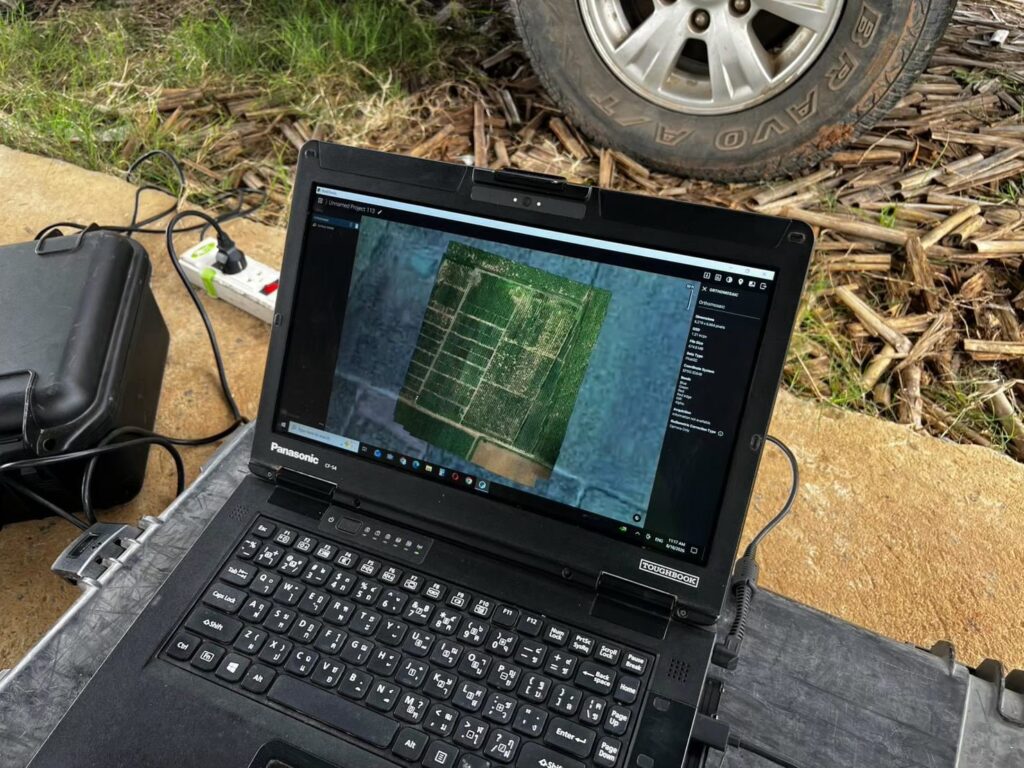
Broadening the Perspective with Drone Imagery (Macro-Level)
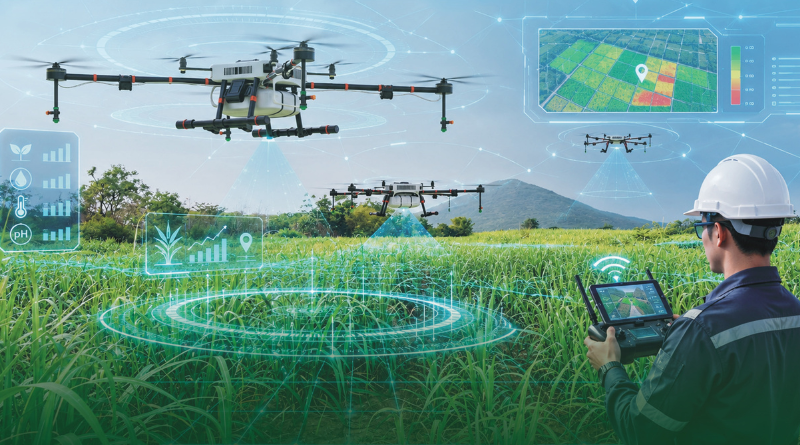
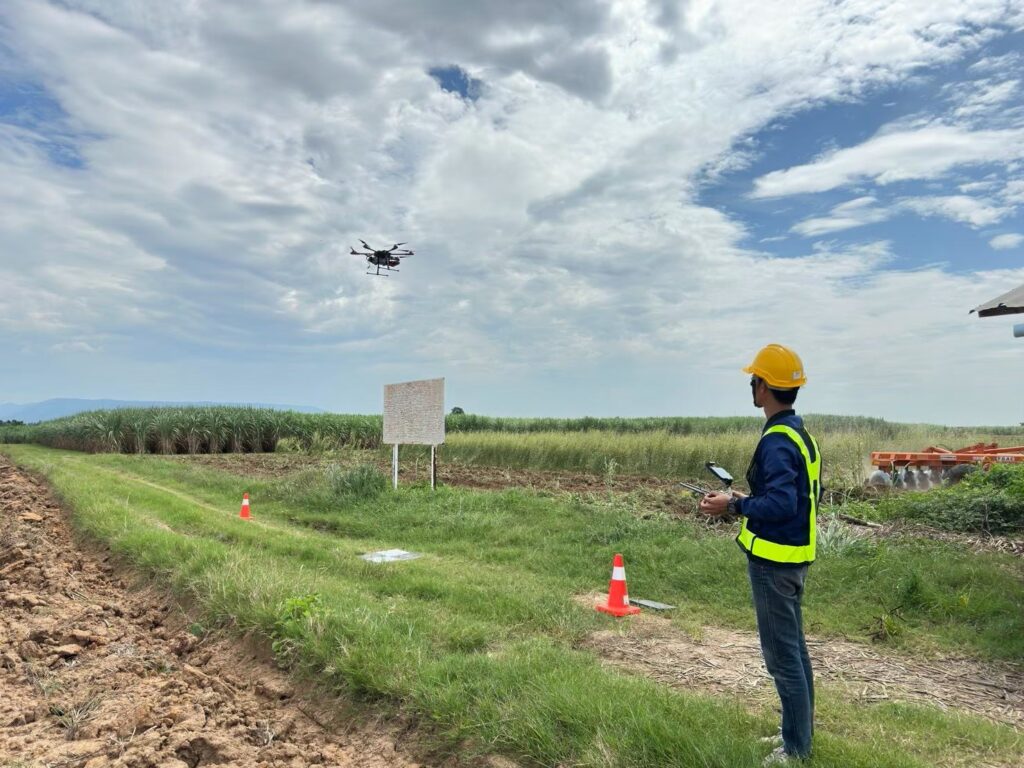
We are becoming familiar with spraying drones, but today’s drones can do much more. When equipped with a multispectral camera, a drone can precisely capture light reflectance from sugarcane leaves. This data is processed by AI to generate various smart maps covering comprehensive sugarcane field management, including:
- Quality Mapping: Evaluates sweetness (Brix) to plan harvests at the most mature spots.
- Yield Mapping: Estimates the production volume in each field zone, allowing for more accurate revenue forecasting and transport planning.
- Weed Mapping: Enables drones to distinguish between broadleaf and narrow-leaf weeds, creating automatic, site-specific spraying flight paths that save chemicals and reduce soil residues.
- White Leaf Disease Mapping: Uses aerial imagery to detect infected sugarcane stools early, allowing farmers to destroy or manage the disease before it spreads to other areas.
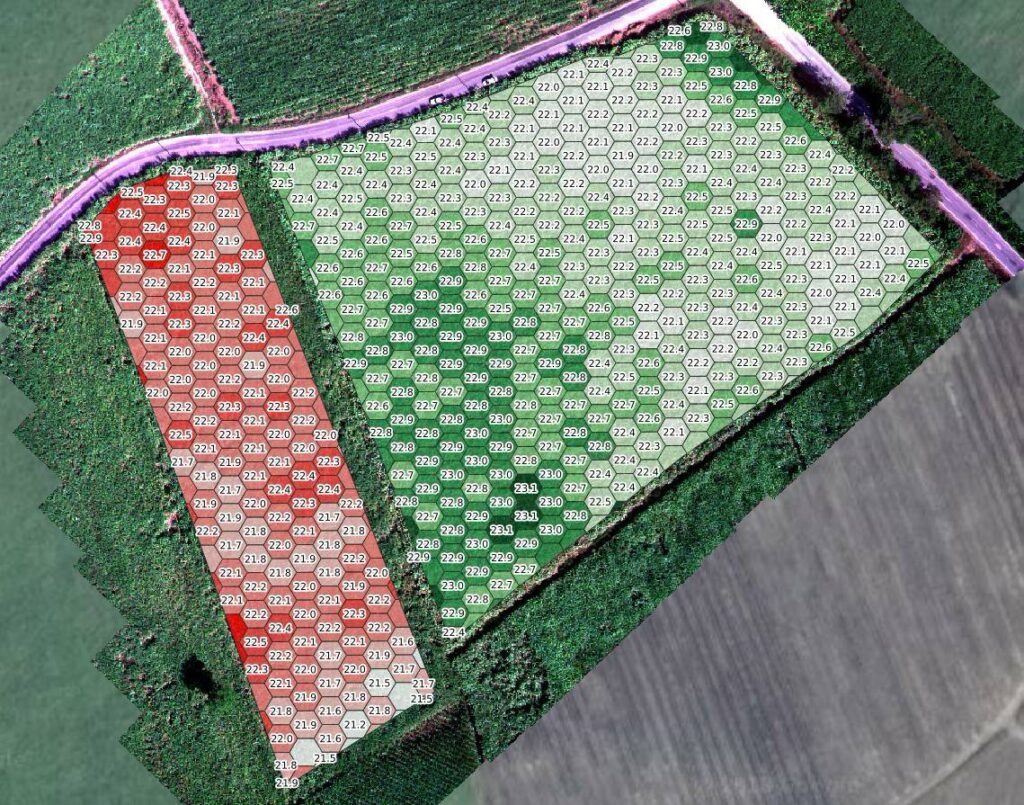
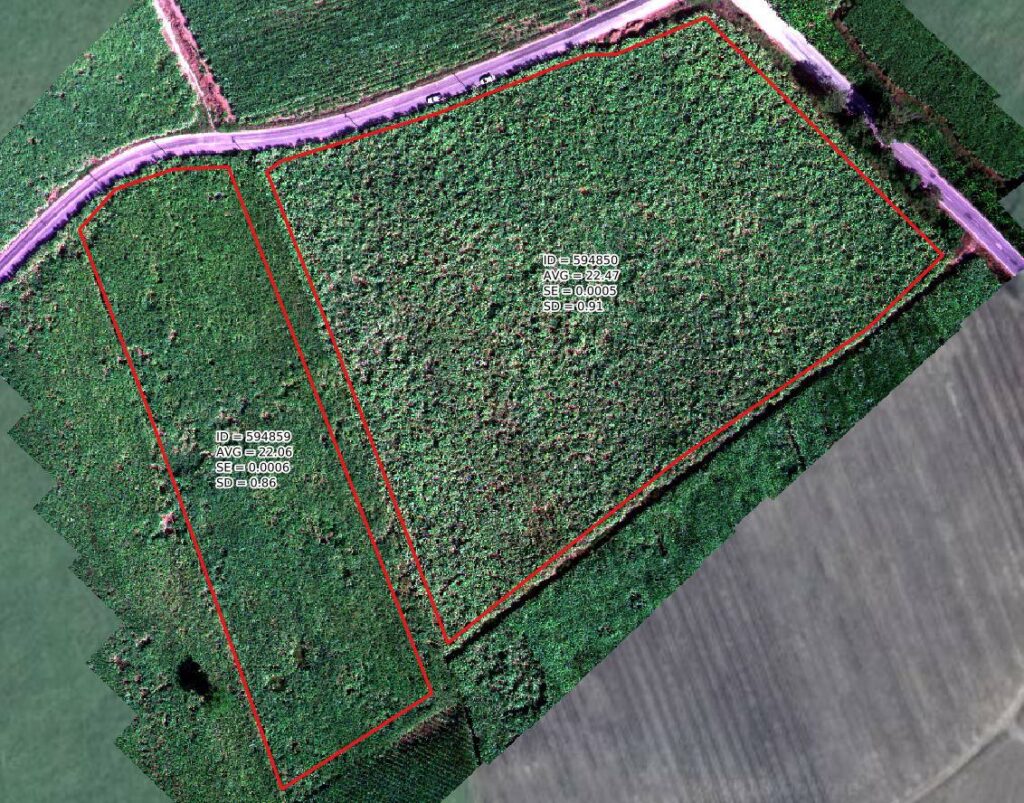
Farmers or extension workers can view all this vital information on a screen and make more accurate decisions, helping to reduce fertilizer and chemical costs while managing the field with maximum efficiency.
Deep Dive into Individual Crop Quality with Portable NIRS (Micro-Level)
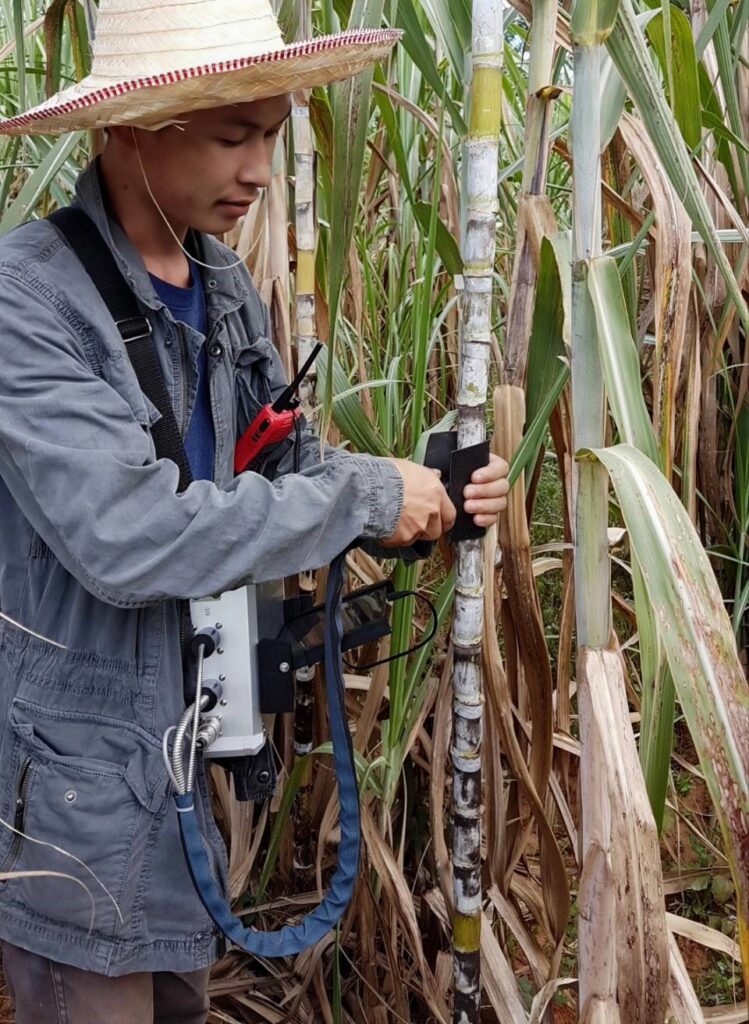
While drones tell us “where to harvest,” Near-Infrared Spectroscopy (NIRS) technology tells us “how sweet the sugarcane is at that spot.” Evolving from bulky laboratory equipment, the research team has miniaturized NIRS into a portable device that can be taken into the field. To use it, one simply scans the device against the growing sugarcane stalk. The technology utilizes reflected infrared light to provide real-time, highly accurate readings of sweetness (C.C.S.) and fiber content. Best of all, this is a non-destructive quality assessment—the sugarcane continues to grow normally.
Leapfrogging the Sugarcane Industry
When we combine the broad view from the sky with the deep dive at the ground level, it yields positive impacts across the entire industrial value chain:
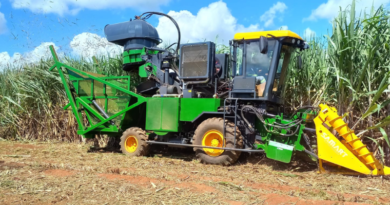
- Smart Harvest Scheduling: Sugar mills can precisely plan and dispatch sugarcane harvesters to fields that have reached peak sweetness, reducing the problem of harvested cane degrading in the yard and maximizing profits from the sugar yield.
- Accelerating Breeding Programs: Researchers can screen for sugarcane parents with high C.C.S. or high thermal energy value for the biomass industry hundreds of times faster, without destroying the parent plants.
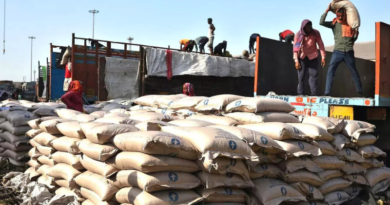
- Transparent and Fair Trade: When both farmers and mills have corresponding sugarcane quality data prior to cutting, price evaluation disputes are eliminated, building trust and a sustainable supply chain.
These technologies are no longer distant concepts or mere theories. They are a reality ready for Thai farmers to use to enhance yields and help propel the Thai sugar industry to the forefront of the global bioeconomy.

By:
Assoc. Prof. Dr. Khwantri Saengprachatanarug,
Department of Agricultural Engineering,Faculty of Engineering,
Khon Kaen University