Turning ‘Carbon’ into Sugar: Solution to Waste Problems and Path to Food Security
Chinese researchers have developed a method to convert “methanol” derived from carbon into “white sugar”, or “sucrose”, without relying on farmland or crops. In the future, this breakthrough could make it possible to transform captured carbon dioxide into food.
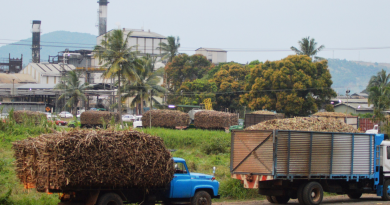
“Sugar crops” are plants that can be processed or refined into sugar for food and various industrial uses — such as sugarcane and sugar beet. However, both require vast amounts of land and water to cultivate. The researchers’ method, by contrast, eliminates the need for farmland entirely, relying instead on enzymes to convert methanol — which can be produced from industrial waste or through the chemical treatment of carbon dioxide — into complex sugars.
“The conversion of synthetic carbon dioxide into food and chemicals is a promising strategy to address both environmental and population challenges while advancing carbon neutrality,” the scientists wrote.
This system not only produces sucrose but can also be adapted to create other essential carbohydrates such as fructose and starch. These advancements mark a significant step toward direct food production from chemicals, without disrupting traditional agriculture.

Turning Carbon Waste into Food
Although China can grow both sugarcane and sugar beet, the country still imports around 5 million tons of sugar each year to meet domestic demand. Faced with mounting pressures from climate change and a growing population, researchers are racing to find more efficient and scalable alternatives for food production. Their solution: producing sugar directly from methanol, which can be synthesized from carbon dioxide.
In 2021, another research team from the Dalian Institute of Chemical Physics developed a method to convert carbon dioxide into methanol at low temperatures, paving the way for “carbon waste” to become a valuable raw material for producing chemicals such as sugar.
Building on that progress, a research team from the Tianjin Institute of Industrial Biotechnology, part of the Chinese Academy of Sciences (CAS), has developed a highly efficient method to convert methanol into sugar through a series of fast, low-energy chemical reactions. They achieved an impressive conversion rate of 86% using a process known as In vitro Biotransformation (ivBT) — a technique that uses enzymes to create useful molecules outside living organisms.
“ivBT has emerged as a highly promising platform for sustainable biomanufacturing. In this study, we successfully designed and implemented an ivBT system for the synthesis of sucrose from low-carbon molecules,” said the researchers.
The researchers developed multiple ivBT platforms to convert low-carbon molecules — derived from the chemical reduction of carbon dioxide or the transformation of industrial chemical/biological waste — into high-carbon sugars (C≥12).
The system not only produced sucrose from methanol for the first time but also generates starch with lower energy consumption than previous techniques. The scientists noted that this method can be applied to a variety of complex sugars, not just those used for sweetening.
“The conversion of synthetic carbon dioxide into food and chemicals is a promising strategy to address both environmental and population challenges while promoting carbon neutrality,” the research team said.
Food and Medicine Production Without Crops
By adapting the same ivBT system, the team was also able to produce fructose, amylose, amylopectin, cellobiose, and cellooligosaccharides. These carbohydrates are not only used in food products but also have applications in medicine and various industrial sectors.
The researchers stated that the system offers a promising pathway for synthesizing oligosaccharides and polysaccharides with diverse structures without the use of crops. These complex sugars play crucial roles in everything from energy storage in the body to medical treatments.
This research lays the groundwork for developing flexible, carbon-negative biomanufacturing platforms in the future. The team acknowledged, however, that further studies are needed before the method can be widely implemented. They plan to enhance enzyme efficiency and make the system more stable and robust for industrial applications.