Samart : Advancing Sugarcane Harvesting Into International Markets
How Samart adapts its harvesting technology to different field conditions, operational challenges and customer needs across international markets.
BUILT FOR ASIA, ADAPTING TO INTERNATIONAL DEMAND
As an Asian company it is expected that our focus is rightly on our home markets, and we are justly proud that at Samart we build machinery which is designed for Asia. Exactly what we mean by that is that we take into consideration the soil conditions, terrain and cane type and density which is typically encountered by our customers.
Working internationally though, we are constantly reminded that we should not expect to find Thailand conditions everywhere. Our product profile demands that we have had to fit into applications on rough unprepared fields or slopes where original planting envisaged manual harvesting. Obviously, this formula works well in certain foreign applications, in particular where companies are undergoing the transmission from manual to mechanical harvesting simply because those countries, (like Thailand) originally planted sugar, quite simply, wherever they could.
And, of course, the experience, gained in the wide variety of conditions in our home country positions the product ideally to become attractive to growers in other parts of the world. However, we notice when we move product into other markets that parameters change and what we value for our home markets may not be considered the prime motivation in other countries.
BEYOND HARVESTING: A NEW ROLE IN SEED CANE PRODUCTION
A good example is when SM 200 Predators were supplied into South America a while back. In Asia, we see the SM 200 “Predator” as a multi role production harvester. As in Thailand, farmers value the speed and low fuel consumption that the Predator returns.
However, some months after delivery to the Latin Americas, after following up with the customer, we found they prized the ability to cut good quality seed cane outweighed everything so they used our machine exclusively to cut their own seed, and they had become a supplier to other businesses. The machines were assigned 100% to seed production. We thought it strange, but the reason people own machines is to make money, so we were just happy that the customer was delighted.
Our experiences of customer usage in other countries has been different, not problematic, just different.
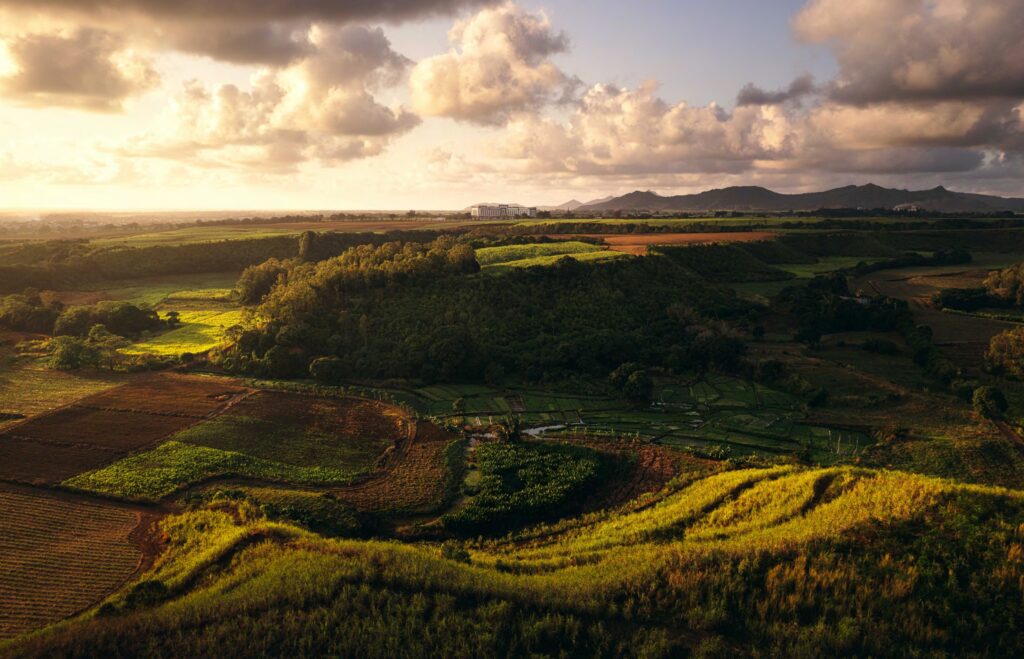
ADAPTING TO MAURITIUS’ UNIQUE FIELD CONDITIONS
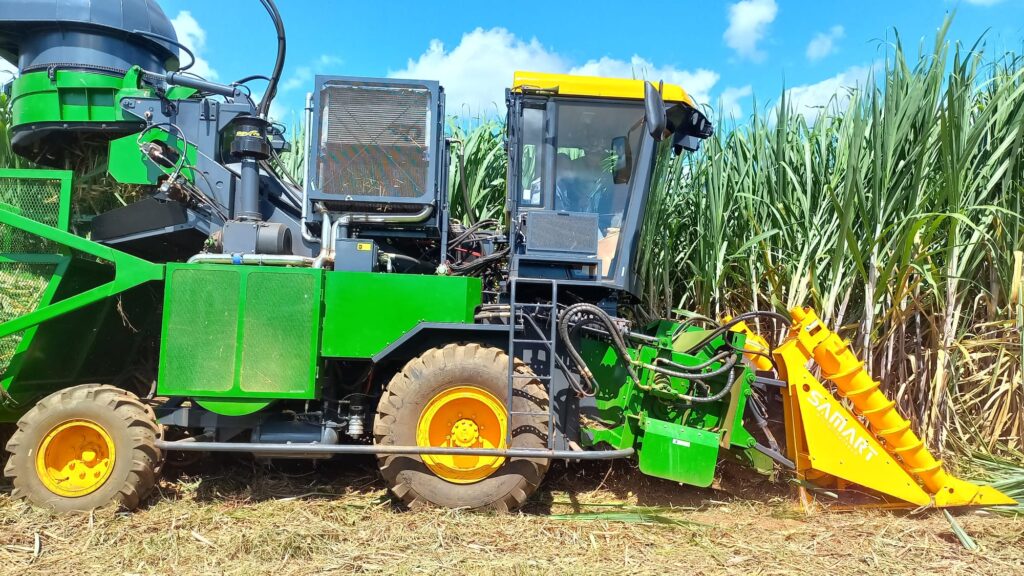
We delivered the first Predator into Mauritius earlier this year. Selected by the customer because of its high production rate and ability to work on unprepared ground. A proven product using the tried and tested Volvo TAD 840 VE engine which punches out 160 kW all involved were convinced that the product would exactly suit the specification.
And, of course it did, in real terms, initial tests with the machine were good with excellent pick up, even for lodges cane, with a good clean cut through the stalk and the cutting rate that the Predator is renowned for..
ENGINEERING SOLUTIONS FOR IMPROVED HARVESTING PERFORMANCE
However, Mauritius is a volcano, which means that the soil is andisolic residue formed from volcanic action. This gives a rich fertile soil structure and together with the high levels of fertiliser and introduction of organics (which support the crop), means that the cane grows very well, forming firm, well-nourished stalks which are exceptionally tall. Easy for us to cut, but per stalk there is a lot more cane weight passing through the processor.
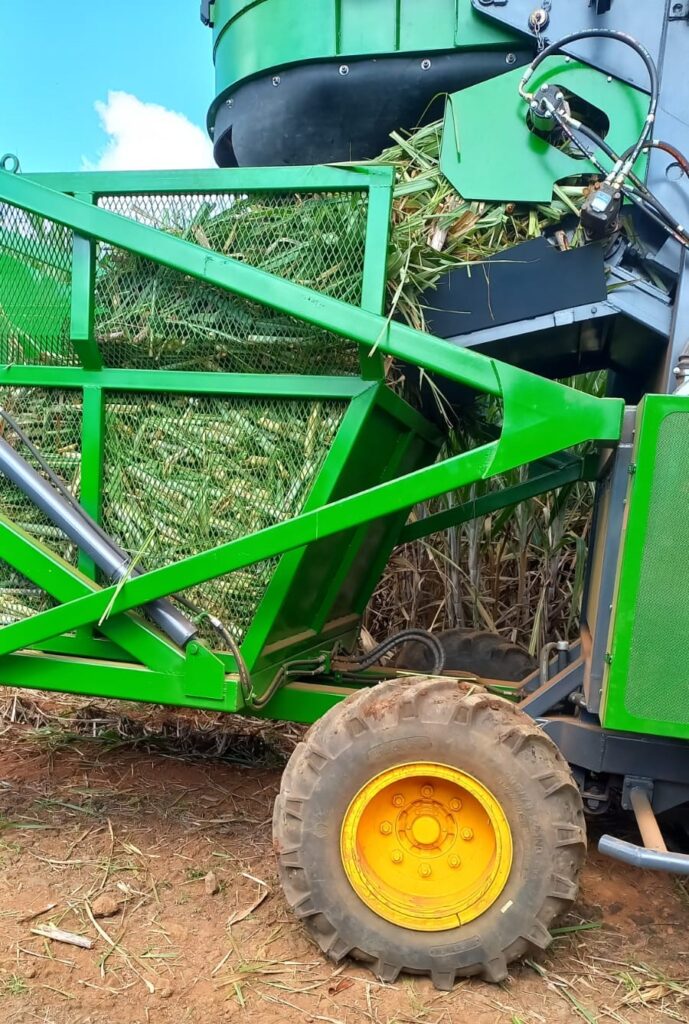
This meant that our standard 2 tonne hopper would have filled very quickly. We replaced the standard with a 3 tonne hopper. This lengthens the unload cycle 50%. More efficient on resources and easier to manage in the field.
Also, because we were working on a volcano, there was the ever present risk of rocks in the fields which permeate up through the soil quite naturally. Nobody who cuts cane wants rocks, but like many things they cannot be totally eliminated, so our approach was to redesign the rotor of the base cutter. The redesign means rocks are allowed to drop through the rotor minimising potential for damage to the cutting blades.
We also introduced a base cutter level feature. Integrated into the driver information panel, it gives a graduated display of base positioning versus the row base. This gives drivers the ability to repeatedly “set” cutters at a “safer” level if rocks are encountered.
The final modification we integrated was a “Jam” monitor. Actually, this is something we have never in the past, been asked for. It seems that some farmers had experience of competitive product, where poor cut quality led to the base cutter becoming so clogged with spurious material that the system literally jammed?
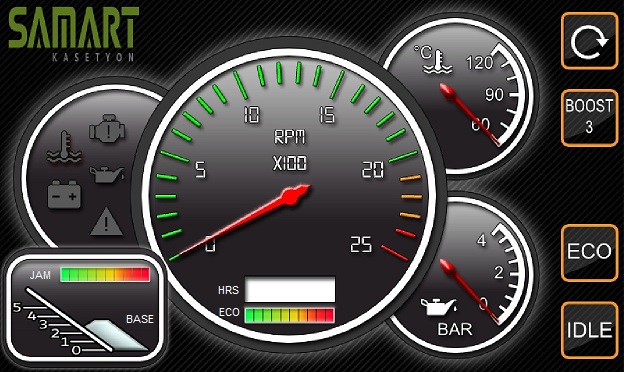
Not something we have ever seen, but we turned this into a load monitor, so drivers can be aware of the load on the cutters as they work. And, of course, should the likelihood of a jam arise, they will have ample warning as the load on cutters increases.
Are these features effective? Certainly! Do they eliminate all problems? Problems for most farmers are a way of life, one can never fully eliminate the potential for machine damage, or breakdown. But, as always, we give the farmers the best tools we can produce to manage their harvesting challenges and make profit for their businesses.
On reflection, we value the diversity of ideas offered by new customers. We think we know everything about the Thai market, we are probably wrong in that assumption, but we certainly do not know what every customer in every part of the world is thinking. But, at Samart, we are learning.
Chose Samart, Chose Life.