Deep Planting Reshapes Thailand’s Sugarcane Industry: Higher Yields, Lower Costs
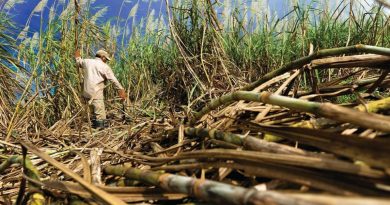
A new approach to sugarcane cultivation known as Deep Planting—which involves planting cane setts deeper than conventional levels—is gaining significant traction among sugarcane producers, especially in tropical regions affected by drought and nutrient-depleted soils.
Yanmar Agribusiness, in collaboration with Japan’s JIRCAS (Japan International Research Center for Agricultural Sciences), has developed a Deep Planting method that places sugarcane setts as deep as 30 centimeters into the soil. This deeper root zone enhances water retention, strengthens plant stability, and improves nutrient uptake—leading to more robust and productive crops.

Field trials in the Philippines—where environmental conditions closely resemble those in Thailand—demonstrated impressive results: crops planted using Deep Planting technology delivered 15–20% higher yields compared to conventional methods. Moreover, nitrogen fertilizer usage was reduced by up to 30%, thanks to more efficient nutrient uptake and less nutrient leaching. The technique also mitigated soil erosion and improved plant resilience under water-stressed conditions. Enhanced root development also supports more vigorous tillering, contributing to higher cane density and biomass.

To support real-world adoption, Yanmar is developing an all-in-one sugarcane planter that can open furrows, place setts, apply fertilizer, and cover soil in a single pass. This innovation is targeted at sugarcane-growing countries such as Thailand, the Philippines, and Vietnam, and is expected to reach commercial markets in the near future.
MARKET ENTRY INTO THAILAND
In 2025, Yanmar announced plans to localize its Deep Planting technology for the Southeast Asian market, with a strong focus on Northeastern Thailand, a region with soil and climate conditions similar to those in the Philippines test zones. The company is currently developing a full-cycle sugarcane planting machine tailored for Thai terrain, with prototype units expected to enter the Thai market via private partnerships or pilot projects with government agencies.
COMPARABLE TECHNOLOGIES IN THAILAND
While Deep Planting may sound novel, Thailand’s sugarcane sector has already begun transitioning toward technologies that support deep-sett planting with precision and efficiency.
A leading example is the Kubota SBP100, designed specifically for Thai farmers. This machine enables uniform billet planting with adjustable planting depths based on soil conditions, reducing labor costs and improving germination rates per hectare.
Other international brands are also entering the Southeast Asian market. The Gessner Billet Planter from Australia is built for high-capacity operations and is ideal for large-scale plantations, while Brazil’s TT 8022 Compact planter integrates fertilization and planting in a single step—meeting the needs of commercial growers looking for efficient, one-pass operations.
For small- to medium-sized farms, Indian manufacturers like Shaktiman and Mahindra offer competitive solutions. These machines are known for cost-efficiency, adjustable configurations, and built-in functions for deep-sett planting with soil covering and in-row fertilizer application.
With a growing range of machinery options, Thai farmers now have the flexibility to adopt Deep Planting technologies according to farm size and budget. For agricultural machinery suppliers and distributors, this presents a compelling business opportunity to expand their product lines and align with a trend that supports higher yields, lower inputs, and long-term sustainability.
Sources: Yanmar Global (2025).