THB 5.3 Billion in Incentives from Government and Private Sector to Promote Clean Cane Cutting
Northeastern Sugarcane Association Confirms Government’s THB 69/Ton Fresh Cane Aid Approved by BAAC Board; Saha Ruang Sugar Mill Pledges Additional THB 40/Ton for New Season
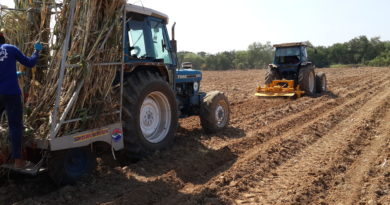
On June 17, 2025, the Cabinet approved a resolution tasking the Bank for Agriculture and Agricultural Cooperatives (BAAC), in collaboration with the Office of the Cane and Sugar Board (OCSB), to implement a support measure for sugarcane farmers who harvest quality fresh cane. This initiative aims to reduce PM2.5 dust pollution for the 2024/2025 production year and elevate Thailand’s sugarcane and sugar industry towards a green economy.

The support involves providing 69 baht per ton to sugarcane farmers who harvest high-quality fresh sugarcane. For the 2024/2025 production season, the total sugarcane volume is estimated at 93.17 million tons, with fresh, high-quality sugarcane expected to account for 80% or approximately 75 million tons. The total budget for this support is estimated at 5,333.5875 million baht, divided into:
Incentive Measures for Fresh Sugarcane Harvesting: 5,175 million baht will be allocated to support sugarcane farmers at a rate of 69 baht per ton. And BAAC Operational Expenses: 158.5875 million baht will cover BAAC’s financial cost compensation and administrative expenses.

Mr. Teerachai Saenkaew, President of the Northeastern Sugarcane Association, informed a local news agency that the progress on the THB 69 per ton fresh cane assistance, funded by the government, has been confirmed as approved by the BAAC Board. The disbursement process is underway, with payments expected soon. He urged farmers to remain patient.
In a separate announcement, Saha Ruang Sugar Mill introduced its “Clean Fresh Cane Harvesting Project 2025/2026,” pledging an additional THB 40 per ton in support for farmers. This incentive is separate from any deductions for burnt cane or other government aid. While this amount may not fully cover 100% of fresh cane harvesting costs, it represents a significant contribution to encourage farmers engaging in fresh cane production.